
Materials

Explore Our Extensive Range of Alloys

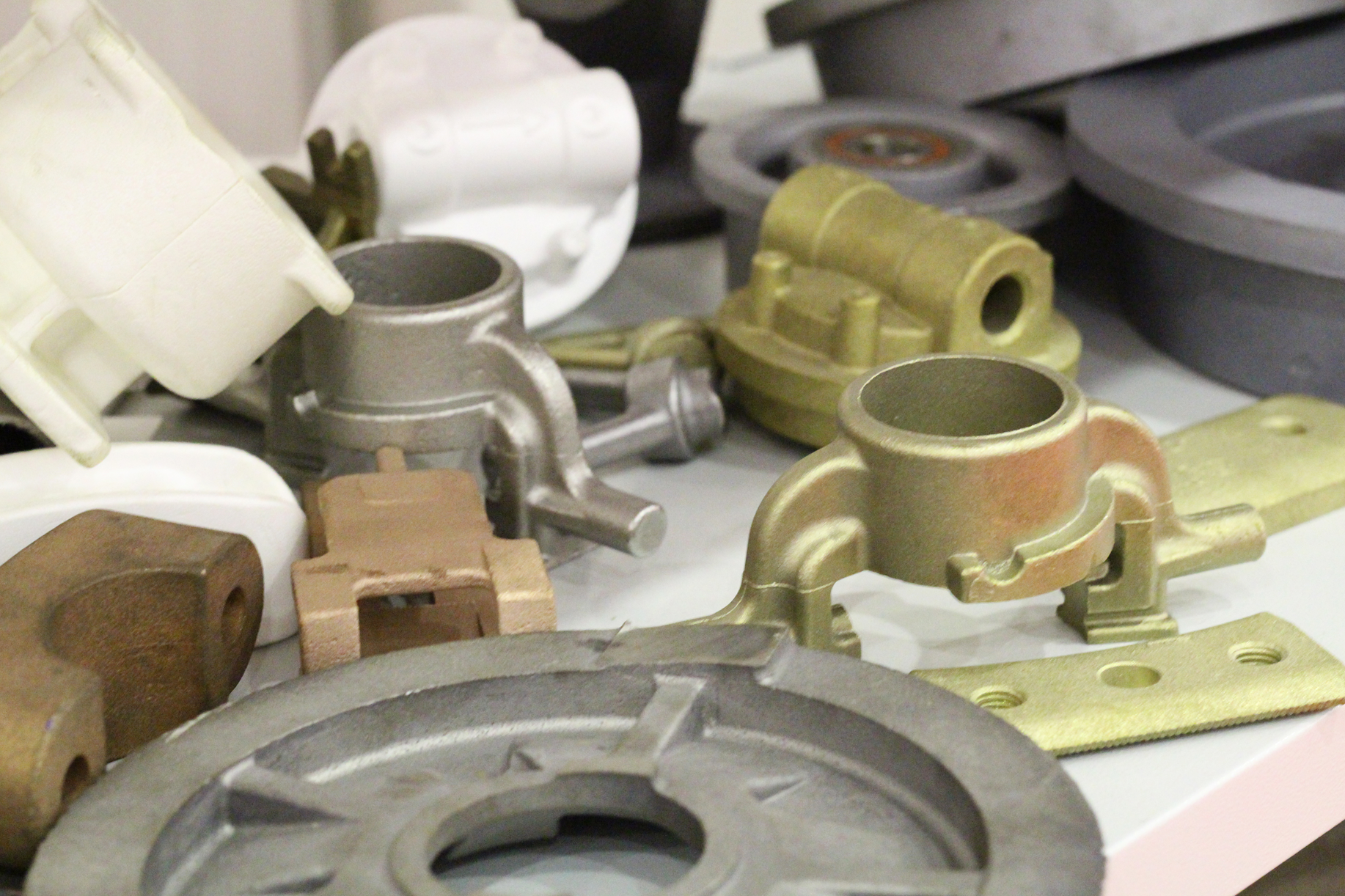
Hycast manufactures complex, high-integrity investment castings across both ferrous and non-ferrous alloys, supporting components up to 40 kg within an indicative 400 mm envelope.

Alloys can be selected from a comprehensive range of carbon and alloy steels, stainless steels, nickel- and cobalt-based alloys, cast irons, brass, bronze and aluminium — enabling us to meet the mechanical, corrosion, temperature and wear performance requirements of most industrial applications.

Where specific performance criteria apply, proprietary or specialised alloys can be developed and produced to specification utilising NATA-accredited metals analysis laboratory.

The most commonly cast alloy groups are detailed below.
200 Series Stainless Steels (Ferritic) 

A cost-effective stainless option offering moderate corrosion resistance, 200 Series stainless steels are ideal for decorative or lightly corrosive environments.  

300 Series Stainless Steels (Austenitic)  

Highly corrosion resistant and non-magnetic, 300 Series stainless steels are widely used in food processing, medical devices and marine applications.  

400 Series Stainless Steels (Martensitic) 

Known for high strength and hardness, these steels are well suited to wear-resistant parts and cutting tools.  

Precipitation Hardening Stainless Steels  

Combining high strength and corrosion resistance, precipitation hardening stainless steels are ideal for aerospace components and high-performance engineering parts.  

Duplex Stainless Steels  

Offering excellent strength and superior resistance to stress corrosion cracking, they are often used in marine, offshore and chemical processing environments. 

Heat Resistant Stainless Steels  

Engineered to maintain strength and integrity at elevated temperatures, these are ideal for furnace parts, heat exchangers and exhaust components.  

Abrasion Resistant Steels  

Designed to withstand repeated wear and impact, these steels are commonly used in mining, quarrying, and heavy equipment applications.  

Nickel Alloys  

The best choice for metal parts exposed to extreme heat, pressure or corrosive chemicals – ideal for harsh environments and aggressive media.  

Carbon and Low Alloy Steels  

A versatile and economical choice with a wide range of mechanical properties, suitable for structural, automotive, and general engineering uses.  

Tool Steels  

Known for their hardness and wear resistance, tool steels are tailored for cutting, forming and high-precision tooling applications.  

Cast Irons  

Offer excellent castability, vibration damping, and machinability, ideal for engine blocks, housings and heavy-duty equipment bases.  

Copper Alloys  

Valued for their thermal and electrical conductivity, copper alloys are widely used in electrical, marine, and architectural applications.  

Cobalt Alloys  

Resistant to wear, corrosion, and high temperatures, cobalt alloys are often used in medical implants, aerospace, and turbine components.  

Aluminium Alloys  

Lightweight yet strong, aluminium alloys are widely used in transportation, aerospace and consumer products where weight reduction is critical.  

Customer-Specific Alloys

These are available, subject to discussion with our Technical team.

Download our list of alloys

PDF [173 KB]

Request a meeting with one of our experts

The Hycast Design
Process

3D Computer Modelling 

The first step of the design process is to develop a 3D computer model of the proposed casting and its components.  We consider parameters such as tool undercuts, gate location, part complexity and material properties. 

Casting Simulation 

Technology is used to simulate and visualise the entire casting process. This allows the team to establish the most effective and timely process, minimising defects, maximising throughput and achieving the desired quality, first time, every time.  

Rapid Prototyping 

Rapid Prototyping technology combines computer modelling with automated wax printing to produce a ‘near perfect’ single casting. This allows the client to confirm shape, form and finish prior to the commencement of tooling.